Music From Movement

Introduction:

A high dose of repetitive exercises can be helpful for patients with neurological conditions, such as spastic cerebral palsy, in improving muscle strength and overcoming impaired selective motor control. Therapies that are currently being used to address impaired gait behavior are potentially unmotivating and limited to therapy time. They are used roughly three times a week for an hour as they require patients to physically go to a hospital or a physical therapy center. This is a relatively low frequency and thus requires a long period of time to yield improvement in gait behavior. Thus, the goal of this project is to provide a new form of physical therapy that uses music to encourage patients to engage in these repetitive exercises. We propose a generative music technology that can motivate high repetition and encourage gait pattern improvements. We describe generative music technology as a means for users to actively create music as opposed to following along to an existing song or pattern. In our design, users will generate different types of music and chords as they walk to encourage these repetitive patterns. 

Solution:

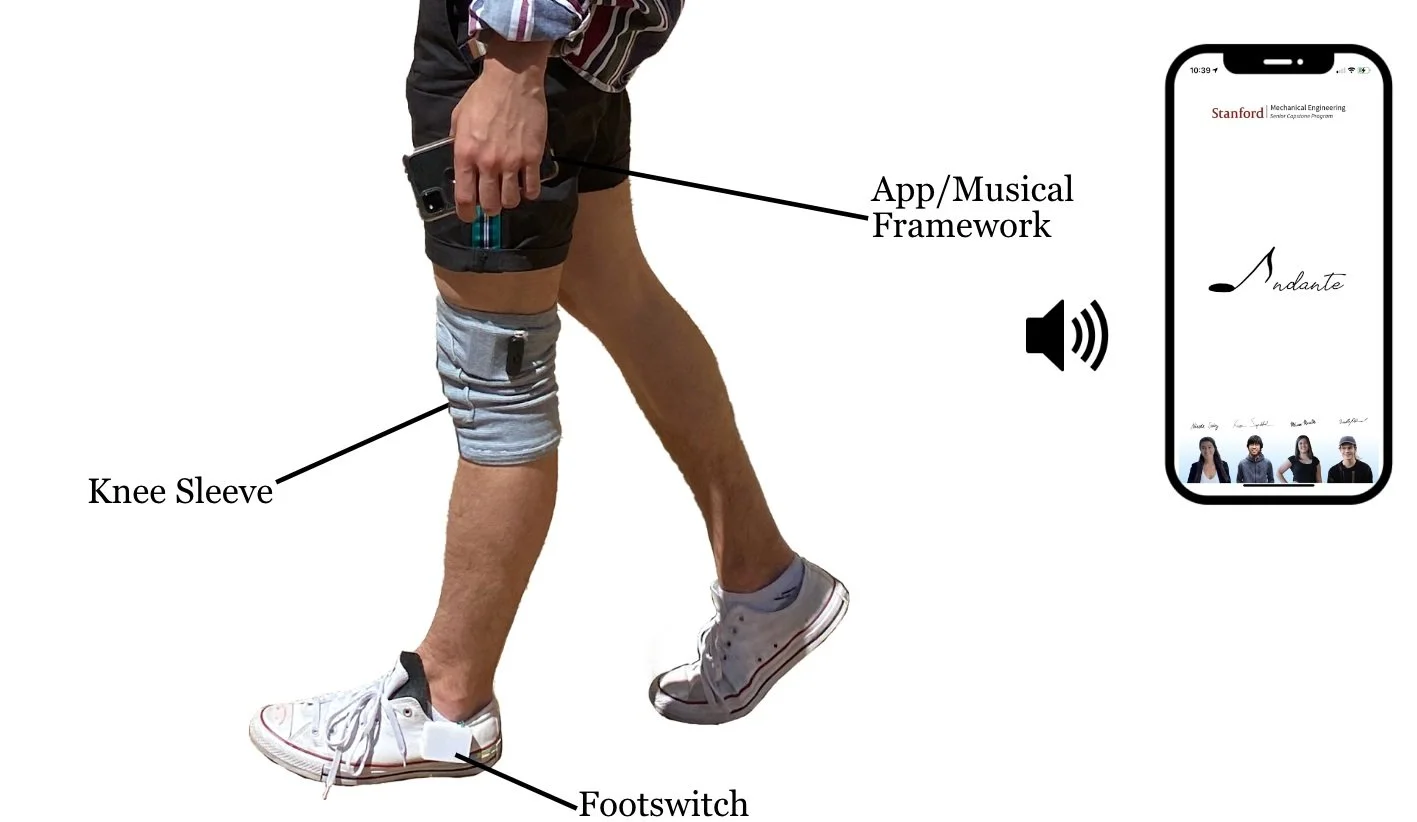
To address these goals, my team and I built a full system containing a footswitch, knee brace, and iOS app which all communicate with each other wirelessly.

Footswitch:

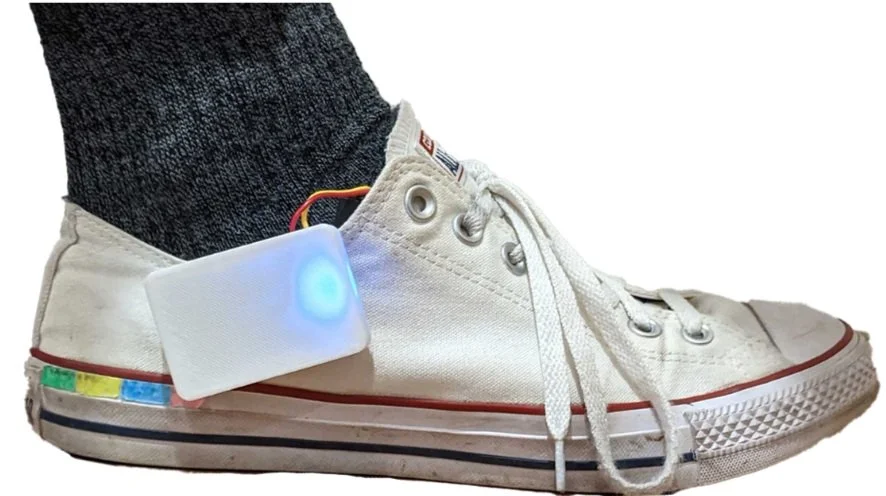
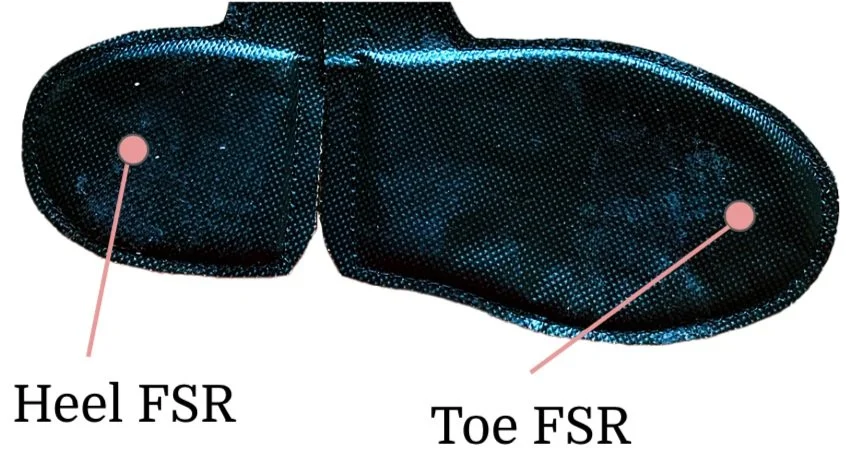
The footswitch precisely captures gait events. Our design focuses on one foot sensitive resistor in the heel, which detects initial contact when pressure is applied, and one force sensitive resistor in the toe, which detects toe-off when pressure is released.

Knee Brace

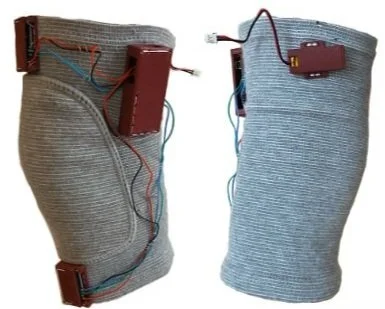
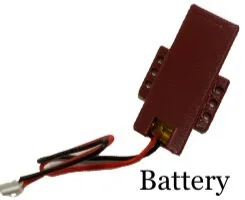
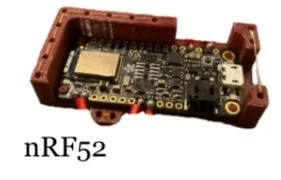
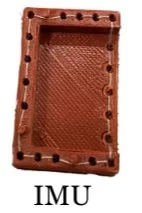
The knee brace component provides user information about knee flexion angle. This is important for both stiff knee gait and flex knee gait disorders. One IMU is placed above the knee and measures the thigh angle from vertical. The other IMU is placed below the knee and measures the shin angle from vertical. This placement allows us to calculate the knee angle, which we then map directly to musical parameters. Additionally, we used an nRF52 microcontroller, a battery, and a battery switch.

In addition to the IMUs, there is again, an nRF microcontroller, a battery, and a battery switch. The 3D printed hardware cases are sewn to the knee brace through the holes in the PLA. We also attached a second layer over the hardware in order to contain and better stabilize the wires and hardware components as well as for aesthetic purposes.

Both force sensors are controlled by an nRF52 microcontroller which allows for Bluetooth communication to the user's personal device. These gait events are then mapped to music to encourage gait pattern improvements. A 3.7V lithium-ion battery are held together in a 3D printed case that can easily be clipped on to the collar of any shoe. 

Software

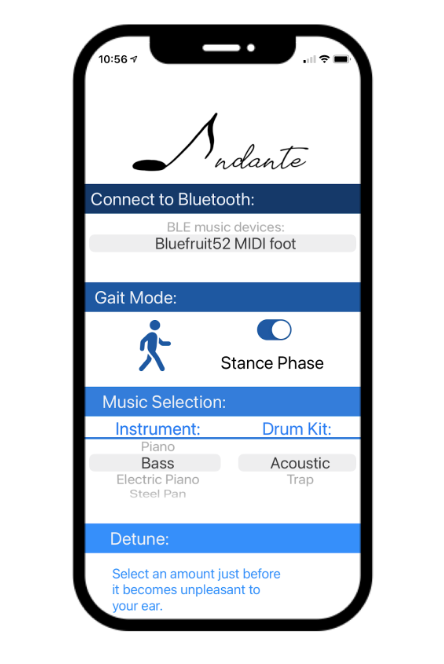
We built our app in the Objective C language and our software implementation allows for multiple music options. It allows for real time digital signal processing (or audio effects), onboard synthesis, and a variety of instrument and drum selections. Our app also allows the user to select from one of two gait modes:

The Swing Phase mode is geared toward individuals with stiff knee gait. The purpose of this mode is to encourage rapid hip, knee, and ankle flexion in early swing phase (so immediately after toe off).

The Stance Phase mode is geared toward individuals with flex knee gait to encourage proper bending of the knee.
Demonstration Videos:.

Next
Next

Crawling Soft Robot